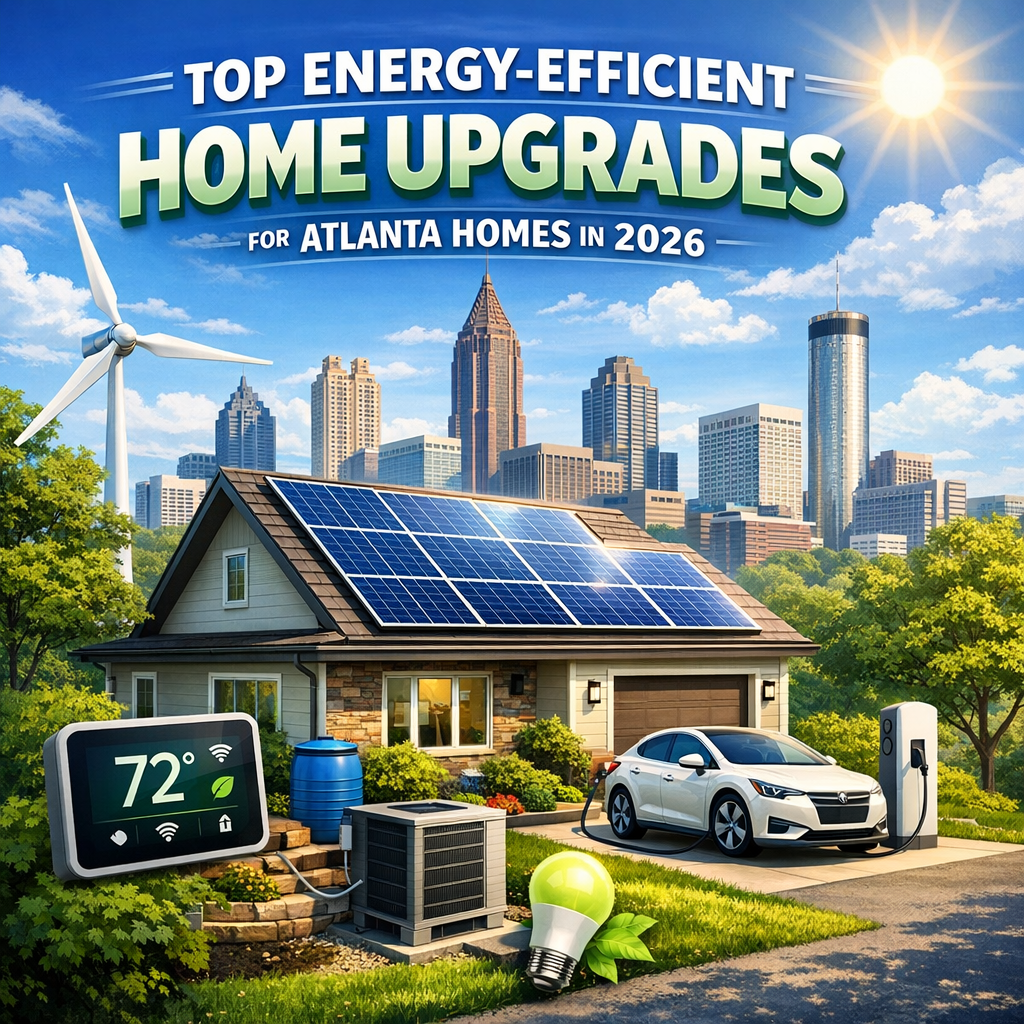
Top Energy-Efficient Home Upgrades for Atlanta Homes in 2026
Energy-Efficient Home Upgrades for Atlanta-Area Homes in 2026
As 2026 approaches, homeowners in the Atlanta area are becoming increasingly focused on energy efficiency. With the rising costs of energy and heightened awareness of environmental impacts, making your home more energy-efficient is not just an option—it’s becoming a necessity. In this blog post, we’ll explore practical upgrades that can enhance energy efficiency and, ultimately, save you money in the long run.
1. Smart HVAC Systems
The Heart of Your Home’s Energy Use
Heating, ventilation, and air conditioning (HVAC) systems are among the largest energy consumers in Atlanta homes. Upgrading to a smart HVAC system can significantly reduce this consumption. Smart HVAC systems adjust the temperature based on real-time usage patterns and weather forecasts, ensuring optimal performance with minimal waste.
Benefits:
- Lower energy bills: Smart systems are precise and operate only when needed.
- Improved indoor air quality: These systems regulate moisture and reduce potential allergens.
2. Solar Panel Installation
Harness the Power of the Sun
Atlanta’s geographical location offers a great advantage for solar power. Installing solar panels can drastically cut your reliance on traditional energy sources and reduce your carbon footprint.
Considerations:
- Initial cost vs. long-term savings: While the upfront cost can be high, federal and state incentives, along with decreasing solar technology prices, can help mitigate this.
- Roof suitability: Not every roof is ideal for solar panels due to direction, angle, or shading. A professional assessment is recommended.
3. Energy-Efficient Windows
A Clear Path to Saving Energy
Older windows can be a significant source of energy loss, especially in the variable climate of Atlanta. Energy-efficient windows equipped with insulating layers and reflective coatings can prevent heat transfer, keeping your home warmer in the winter and cooler in the summer.
Key Advantages:
- Reduced heating and cooling costs: These windows can lower energy bills by up to 12%.
- Enhanced comfort: They minimize cold drafts and hot spots in rooms.
4. LED Lighting Solutions
Brighten Up Your Home Efficiently
Transitioning to LED lighting is one of the easiest and most cost-effective energy upgrades. LEDs use at least 75% less energy and last 25 times longer than incandescent lighting.
Simple Steps:
- Replace indoor and outdoor bulbs: Focus on areas that require prolonged use of light.
- Consider smart lighting systems: These allow for remote control, customization, and further energy savings.
5. High-Efficiency Appliances
Upgrade to Greener Appliances
As appliances age, their efficiency can diminish significantly. Investing in modern, high-efficiency appliances is crucial for reducing energy usage and utility bills.
Tips for Choosing:
- Look for the ENERGY STAR label: This certification means the appliance meets stringent energy efficiency guidelines.
- Consider appliance size and functionality: Ensure the appliances fit your home and lifestyle needs to avoid overuse and unnecessary energy consumption.
6. Insulation and Sealing
Keep the Elements Out
Proper insulation and sealing can dramatically affect your home’s energy efficiency. Insulating attics, walls, and floors and sealing cracks or gaps around doors and windows can prevent heat loss and gain, maintaining a more consistent indoor temperature.
Focus Areas:
- Attic spaces: Heat rises, and without proper insulation, your HVAC system has to work harder.
- Doors and windows: Gaps can let air escape, undermining your heating and cooling efforts.
Conclusion
Implementing energy-efficient upgrades in Atlanta-area homes in 2026 is both a financially and environmentally conscious decision. From smart HVAC systems to sophisticated insulation techniques, each upgrade plays a significant role in reducing your home’s energy footprint and enhancing comfort. Whether you plan to retrofit an old home or build a new one, these improvements will pave the way for a more sustainable and cost-effective living environment.